CREATIVITY is CONTAGIOUS! PASSitON
ROCK N' CREATE #ThinkOUTSIDEtheBOX

"The Gene Hackers"


Science, Tech & Disrupt
 By Michael Specter via newyorker.com
Illustration by Todd St. John
 
A powerful new technology enables us to manipulate our DNA more easily than ever before. “Imagine being able to manipulate a specific region of DNA . . . almost as easily as correcting a typo,” CRISPR’s unprecedented ability to edit genetic code will make possible a new generation of medical treatments.

For much of the past century, biology has been consumed with three essential questions: What does each gene do? How do we find the genetic mutations that make us sick? And how can we overcome them? With CRISPR, the answers have become attainable, and we are closing in on a sort of grand unified theory of genetics.

CRISPR technology offers a new outlet for the inchoate fear of tinkering with the fundamentals of life. There are many valid reasons to worry. But it is essential to assess both the risks and the benefits of any new technology.
Read full article via newyorker.com.


http://ecoworldreactor.blogspot.com/2015/04/garbage-world-is-not-enough-live.html 


"Turning Food Waste into Graphene"


    Sustainability & Disrupt

    EU Project Explores Deriving Graphene From Food Waste"


    I’ve certainly seen many references to potential super material graphene over the past few years… but I haven’t really dug into them. But not only does this material have the potential to revolutionize the green economy, but it also could be produced from food waste. A new EU project, PlasCarb, is exploring the potential to create graphitic carbon (the basic material for graphene) and hydrogen from food headed for the landfill.

    http://ecoworldreactor.blogspot.com/2015/04/garbage-world-is-not-enough-live.html


Whose Smart City?


Open Sustainability & Innovation


Whose Smart City? 

"Plaza del Torico, Teruel, HDR"  by Marc (marcp_dmoz) CC BY NC SA


The proliferation of 'smart' solutions to a deluge of political and economic problems in today's cities may well serve to reinforce urban inequality at a time when new radical alternatives are in desperate need.

As a student of cities, I am very much interested in the diffusion and circulation of buzzwords, global slogans and global ideas about cities and their development strategies. In the last decade, I have observed the shifts from debates on technological and information cities, to cultural cities, creative cities, sustainable, green and resilient cities, to our current conjuncture with the rise of the 'smart' cities. But what does it mean for a city to be ‘smart’? What are the implications and rationales behind smart urbanism? Is smart urbanism as positive as the term suggests? 

The concept behind smart cities is actually rather vague, there is no common definition of what a smart city is, most commonly the idea relies on the implicit assumption that urban infrastructures and everyday life can/should be optimized and ’greened’ through the technologies and innovations of global IT companies. So, what’s the problem with smart cities? Who wouldn’t want to live in a smart city anyway?

"Cuerpo, deseo, amor y tecnología"

Technology & Society

“Cuerpo, deseo, amor y tecnología”


"La revolución cibernética conduce al hombre, ante la equivalencia del cerebro y del computer, a la pregunta crucial: «¿Soy un hombre o una máquina?». La revolución genética que está en curso lleva a la cuestión: «¿Soy un hombre o un clon virtual?». La revolución sexual, al liberar todas las virtualidades del deseo, lleva al interrogante fundamental: «¿Soy un hombre o una mujer?» (…) En cuanto a la revolución política y social, prototipo de todas las demás, habrá conducido al hombre, dándole el uso de su libertad y de su voluntad propia, a preguntarse, según una lógica implacable, dónde está su voluntad propia, qué quiere en el fondo y qué tiene derecho a esperar de sí mismo -problema insoluble-. Ahí está el resultado paradójico de cualquier revolución: con ella comienzan la indeterminación, la angustia y la confusión."

Juan Pablo Anaya en Las Huellas del Hombre Invisible.


http://ecoworldreactor.blogspot.com/2015/04/garbage-world-is-not-enough-live.html 


Ballerina Project - Beauty and Art Through Your Eyes

"Ballerina Project"

Beauty & Art Through Your Eyes

by Dane Shitagi


 The Ballerina Project grew from the idea of New York City as a magnet for creativity; each photograph is a collaborative work of dance, fashion design and photography played out against the city's landscape.

 This album will showcase the images that best represent the journey of the Ballerina Project over the last 13+ years.


"streaming" de FIIS 2015 Donde Comienza el Cambio


Streaming via Movistar TV Chile

Disfruta de FiiS 2015 Del 22 al 24 de Octubre te traemos una nueva edición del fiiS, Festival Internacional de Innovación Social. Tres días en vivo de intercambio de experiencias para inspirar y acelerar uevas conciencias, nuevos caminos y nuevas soluciones. FiiS 2015, la vitrina más importante de Latinoamérica para los agentes de cambio, un festival urbano con la mejor música y diversión.
http://www.movistarchile.tv/63252-festival-internacional-de-innovacion-social   
Sigue el steaming de #Fiis2015
 

Clemens Behr "altering the perception of space"


"Clemens Behr" by via Collater.al  (CC BY)


Behr is a street-artist active from the age of 18 years, which comes from the world of graffiti traditional but always fond of Futurism and broadcast by HBO Dadaism.

His installations are amazing collage of cardboard, packing tape and plastic bags, that invade public and private places, changing and completely altering the perception of space.


His artistic maturity has been marked by an opera in particular: Nude Descending a Staircase, No.2 imaginary animal characters Marcel Duchamp that has deeply influenced the evolution of his work.

"Antarctic Research Station Looks Like a Spaceship"


Science, Design & Disrupt

by WIRED


Antarctica is on Earth, but it feels alien—a vast, cold, rapidly melting desert populated by scientists and emperor penguins. So it makes sense that today’s Antarctic research stations look a lot like spaceships: They’re often the only things protecting their inhabitants from inhospitable places people really shouldn’t be living in... Full article via WIRED


http://ecoworldreactor.blogspot.com/2015/08/classic-art-pop-culture-nastya-nudnik.html

"Lab Testing Reinvented" Elizabeth Holmes of Theranos


Science, Disrupt & Innovation

"Lab Testing Reinvented" Elizabeth Holmes at TedMED

Elizabeth talked about this right and the importance of enabling early detection and empowering individuals to make educated decisions about their healthcare.

 "I don’t want to make an incremental change in some technology in my life. I want to create a whole new technology, and one that is aimed at helping humanity at all levels regardless of geography or ethnicity or age or gender." - Elizabeth Holmes.

TEDMED  is an immersive experience that challenges us to recharge our brains, ignite new thinking, energize our work and enlarge our worldview. We leave TEDMED imagining fresh possibilities and solutions for the future of health and medicine.


http://ecoworldreactor.blogspot.com/2015/01/the-gathering-saturnine-live-rocknroll.html 


"Creativity from Southern World"

 Austral wires By ©msanhuezacelsi 
 
 
http://www.msanhuezacelsi.portfoliobox.me/  Valdivia "Green Sky" By ©msanhuezacelsi 


http://ecoworldreactor.blogspot.com/2015/01/the-gathering-saturnine-live-rocknroll.html


¿Realmente funcionan los juegos para entrenar el cerebro?

Mind & Creativity

¿Realmente funcionan los juegos para entrenar el cerebro?

Muchos quieren entrenar el cerebro para tener habilidades cognitivas agudas, y los juegos para el cerebro prometen ayudar. Pero, ¿realmente funcionan?


A medida de que pasa el tiempo todo nuestro cuerpo envejece, incluido nuestro cerebro. Las neuronas se mueren y nunca más se regeneran al contrario de otras células del organismo, nuestras funciones cognitivas se deterioran, y más aún cuando se sufre de algún desorden cerebral.

Aquí es cuando aparecen los juegos para el cerebro (como los de Lumosity) que publicitan que están creados para que mejoremos nuestra memoria, evitemos perdidas cognitivas y disminuyamos las posibilidad de mostrar los síntomas de enfermedades como la demencia y Alzheimer. Pero, ¿realmente sirven de algo? La realidad es un poco más complicada.


Neuroplastia y reserva cognitiva

Los juegos para el cerebro basan su efectividad en la teoría de la neuroplastia, lo que consiste en modificar el funcionamiento del cerebro gracias al proceso de aprender cosas nuevas. Se suponía que la neuroplastia sólo funcionaba en niños cuando el cerebro aún se estaba desarrollando, pero gracias a un estudio hecho en el 2004 donde hicieron que adultos aprendieran a hacer malabares, se descubrió que cuando aprendían esta nueva tarea la composición de sus cerebros presentaba cambios físicos a largo plazo, concluyendo que los adultos también presentaban el fenómeno de la neuroplastia.

Los juegos para el cerebro también usan la teoría de la reserva cognitiva como base para decir que funcionan. En pocas palabras, esta teoría explica que mientras más uses el cerebro y mientras más activo lo mantengas, será más difícil que muestres síntomas de declinación cognitiva característicos de enfermedades cerebrales. Seguro has escuchado mucho eso de que “el cerebro es un musculo y hay que entrenarlo”.
entrenar el cerebro


Aprendiendo cosas nuevas

Cuando se mira con cuidado cómo funcionan estos juegos se nota que hacen que el jugador utilice todas sus habilidades cognitivas: memoria, atención, velocidad de procesamiento, capacidades para resolver problemas, etc.,  como herramientas para jugar en escenarios que se vuelven más difíciles de forma progresiva. Entonces, parece obvio que su finalidad es que aprendas nuevas habilidades, que desafíes y que mantengas activo a tu cerebro, y que, por lo tanto, las teorías de reserva cognitiva y neuroplasticidad en adultos en los que se basan sean una manera de evitar síntomas de problemas cognitivos.

Sin embargo, la realidad es que estos juegos solamente entrenan al cerebro para que aprendas a jugar el juego y volverte cada vez mejor, pero, lamentablemente, no te dan habilidades nuevas para resolver problemas que te encontrarás en la vida real. Esta es la conclusión del Centro de Longevidad de Stanford quienes explican que este tema es muy complejo y que los juegos de para el cerebro, como Lumosity, hacen declaraciones que son exageradas y engañosas para que los usuarios gasten dinero en una suscripción, algo que es irresponsable porque no se ha demostrado científicamente que este tipo de juegos son efectivos para eliminar síntomas de problemas cognitivos.

Al mismo tiempo, ellos dicen que este tipo de juegos pueden funcionar, en algunos casos, para mejorar la memoria y el funcionamiento del cerebro en general, pero que en otros individuos las nuevas habilidades se disipan con el tiempo.


Qué se puede hacer para mantener el cerebro funcionando todo el tiempo

Si lo tuyo es jugar, se demostró en un estudio del 2014 que jugar Portal 2 es mucho más efectivo para mejorar el rendimiento del cerebro al momento de resolver problemas, aprender persistencia y habilidades espaciales.

Otros consejos comunes para hacer que el cerebro se mantenga sano es salir a caminar (o hacer otros ejercicios), aprender un nuevo lenguaje, tener un pasatiempo y comer de manera equilibrada.


FUENTE:¿Realmente funcionan los juegos para entrenar el cerebro? por Gabriela González via blogthinkbig.com (CC BY SA)


 Para mas información en

blogthinkbig.com


Imágenes via pixabay, licenciadas bajo dominio público (CC0)


"100 years of Changing Beauty in 1 minute"

The Changing Beauty of  woman by cut


Time lapse of a model getting her hair and makeup done to match every decade from 1910 to 2010.  100 Years of Changing Beauty, Makeup, and Hairstyles in 1 Minute of USA, Italy, India, Korea, Russia, Mexico, Iran, Germany and Philippines . 


http://ecoworldreactor.blogspot.com/2015/08/classic-art-pop-culture-nastya-nudnik.html

"Creativity is Contagious"


"Gestionar el Optimismo" ¿Se puede?


Innovation & Creativity

¿Se puede Gestionar el Optimismo?

Marita Abraham en TEDxUTN


¿Puede realmente ser gestionado algo tan intangible como el Optimismo? para dilucidar esta fascinante interrogante la Conferencista, Coach y Consultora Internacional Marita Abraham nos expone en una vibrante charla  TEDx su visión y experiencia,  invitándonos a ver la vida con otros ojos, con los del optimismo, viéndolo no solo como una actitud sino como una filosofía que nos moviliza a generar cambios que nos ayuden e impulsen a realizarnos en nuestra vida.


http://ecoworldreactor.blogspot.com/2015/08/classic-art-pop-culture-nastya-nudnik.html 
 

"ART is beaty"

ART is BEAUTY... photo via pixabay licensed under CC0

A promising test for pancreatic cancer from a teenager

Science & creativity

"A promising test for pancreatic cancer from a teenager"

Jack Andraka at  Ted talks

http://images.ted.com/images/ted/3afd7962e92217458ad4e0ec5e0e03f32e9d02ca_1600x1200.jpg


Over 85 percent of all pancreatic cancers are diagnosed late, when someone has less than two percent chance of survival. How could this be? Jack Andraka talks about how he developed a promising early detection test for pancreatic cancer that's super cheap, effective and non-invasive — all before his 16th birthday.

Jack Andraka created a Cancer detector, which is a paper on carbon nanotubes, a biology lecture on antibodies and a flash of insight led 15-year-old Jack Andraka to design a cheaper, more sensitive cancer detector.


"Happy 125th anniversary of the great master of horror #Lovecraft"


Happy 125th anniversary of 
 "the great master of horror"

Innovative Spaces

Space matters. It affects the way we work, think and interact. That’s why building environments that encourage creative collaboration has become a central issue for organisations and city planners globally.  From the corporate Googleplex to the startup accelerator and the innovation campus, billions are being spent on the innovative work-scapes of the future.

The ‘architecture of innovation’ is not itself anything new.  Sixty years ago biologist Jonas Salk claimed his discovery of the polio vaccine only came when he swapped his basement lab for an Italian monastery which eventually became the template for the iconic Louis Kahn-designed Salk Institute.  Yet uninspiring architecture can still be great idea generators from MIT’s leaky Building 20 to the garage startups of Silicon Valley.     

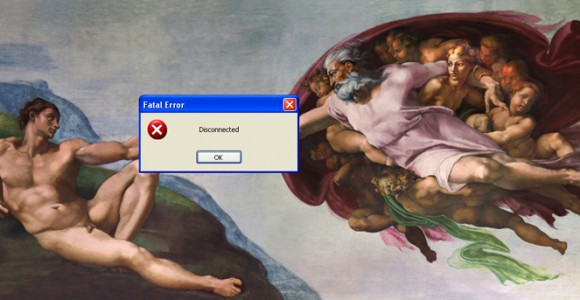
Classic Art & Pop Culture "Nastya Nudnik – Emoji Nation"

ART & CREATIVITY

"Nastya Nudnik – Emoji Nation"
 by Lucael via Collater.al (CC BY)

Nastya Nudnik is a young Ukrainian artist who created these works by inserting the windows pop-up windows and icons of social networks in some of the most famous paintings in art history.


http://ecoworldreactor.blogspot.com/2015/08/classic-art-pop-culture-nastya-nudnik.html


"Una Idea Para Cambiar la Historia 2015" Innovación Abierta


Innovation & Creativity

“1 Idea Para Cambiar la Historia 2015”

History Channel con el lanzamiento de este concurso busca potenciar la Creatividad e Innovación en América Latina. 


Tras la gran acogida de “1 IDEA PARA CAMBIAR LA HISTORIA 2014”, el canal History anunció el lanzamiento de la segunda edición de este concurso que busca potenciar el talento, la creatividad y la innovación de los latinoamericanos.  En esta nueva cita, se pretende seguir despertando el interés de la gran comunidad de emprendedores de la región, buscando aprovechar al máximo su potencial y espíritu innovador, motivándolos a que compartan y den a conocer ante el mundo sus iniciativas.


http://ecoworldreactor.blogspot.com/2015/04/garbage-world-is-not-enough-live.html